
About
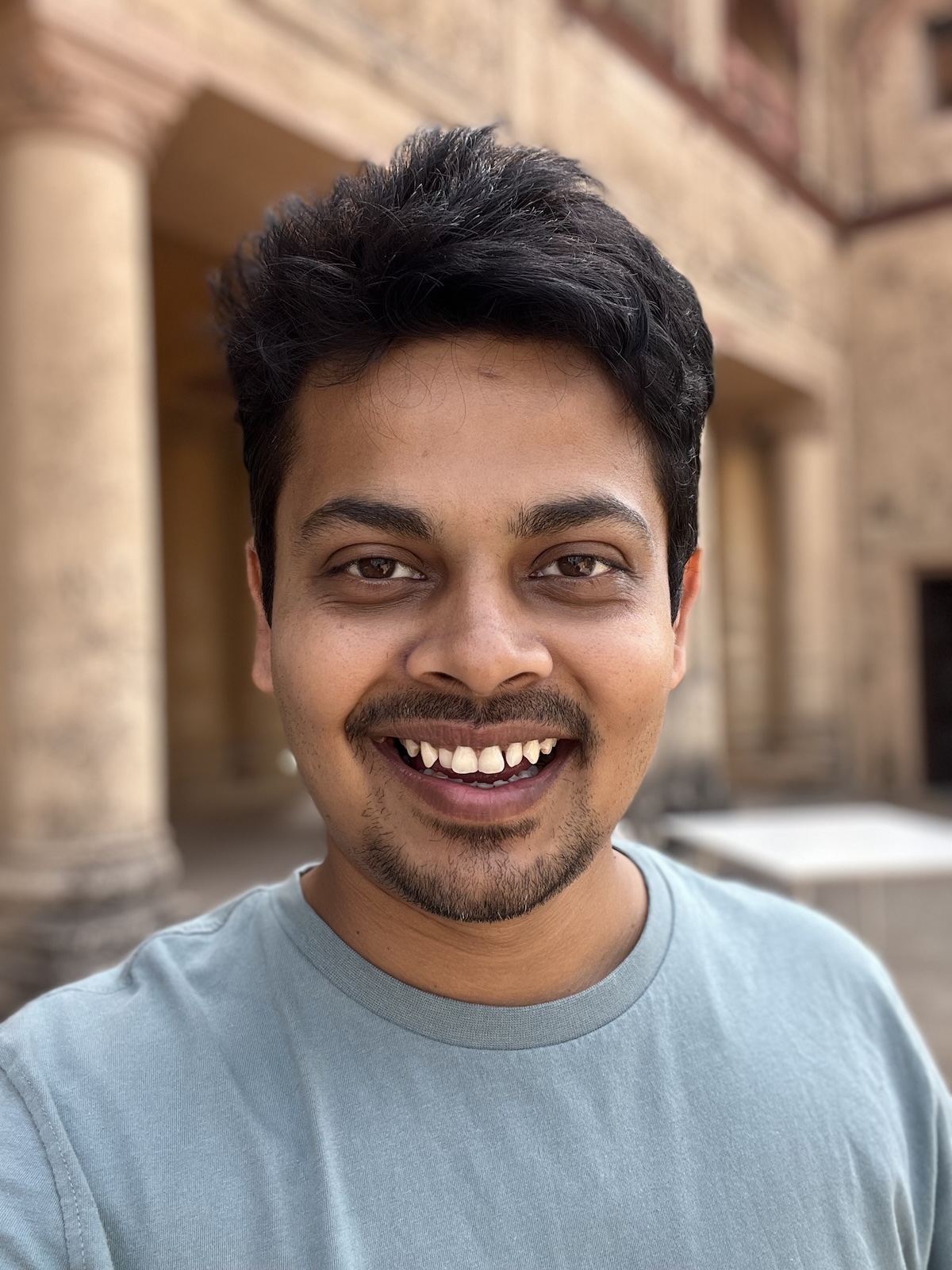
I'm Abhishek. I design things that matter — and I've been doing it long enough to know the difference between design that looks good and design that works.
Senior Product Designer at Microsoft. ISB Leadership & AI programme. 12+ years across enterprise software, consumer apps, e-commerce, telecom, and advertising. Two startups built from zero.
But none of that is the interesting part. The interesting part is that I started in digital before UX had a name — when Flash was a career choice, when the only brief was ‘make it work’, and when the only feedback loop was whether people came back. That era is gone. But the mindset it gave me isn't: move fast, stay curious, measure what matters, and never confuse the craft with the outcome.
Writing
Philosophy
In a world driven by aesthetics, it's easy to overlook the true essence of design. I don't design because it's my job. I design because broken products waste human potential. Every confusing interface, every failed interaction, every abandoned cart — that's someone's time and energy lost. I'd like to get some of that back.
Design is the most interesting problem-solving discipline I know. It sits at the intersection of psychology, business, technology, and aesthetics — and it demands fluency in all four simultaneously. What I love most isn't the deliverable. It's the moment a complex problem suddenly has a shape. When you've done the research, run the workshops, drawn the frameworks, and suddenly the answer is obvious — and you can't believe it wasn't obvious before. That moment is worth everything that comes before it.
What I bring
The 5 Things I Bring
Process
How I Work
I am a design generalist by choice. I've worked in fashion, advertising, digital agencies, enterprise software, telecom, and startups. I've been a Creative Director, a Design Manager, a Founder, and a Senior IC at one of the world's most complex software products.
That range isn't scattered. It's the point. The best design decisions I've ever made came from knowing just enough about the adjacent discipline to ask the question nobody else was asking. Generalism isn't the absence of depth. It's depth applied across a wider surface.
The human behind the work
Beyond the Work
Current focus
Becoming AI-Native
The thing about AI in product design isn't the tools. It's the shift in what's possible.
At Microsoft, I didn't just design AI features. I designed for a fundamentally different interaction model - one where the system generates output, and the designer's job is to shape the intelligence, not just the interface. Chart Insights, the Wiki Agent, Copilot integration - these weren't UI projects. They were epistemological questions: what should an AI say, when should it say it, and how do you design trust with a system that can be wrong?
I'm 1800+ hours and 2.5B tokens into building my own tools with AI since then - proof I practice this, not just design for it.
That's the work I find most interesting right now. I'm currently deepening this through the ISB Leadership & AI programme - learning to think about AI not as a feature, but as a business transformation lever. The goal isn't to become an AI engineer. It's to become the designer in the room who understands AI well enough to ask the right questions and build the right experiences around it.
I believe the designers who'll matter in the next decade are the ones who can work fluidly at the boundary of human judgment and machine intelligence. That's where I'm deliberately positioning myself.
“My cross-disciplinary curiosity takes me from art to psychology to philosophy to history to science and back. That's not T-shaped - one deep spike with a shallow crust on top. It's comb-shaped: multiple deep spikes, each one sharpening the others.”
Unfiltered
Strong Opinions
01
Most design processes are taught as religion, not as tools. The double diamond is a map. Maps are useful. They're not the territory.
02
"Design thinking" isn't a design skill. It's a way of framing problems that any sharp thinker in any discipline can do. Designers named it first. We don't own it.
03
The best junior designers I've worked with are obsessed with the problem. The ones who struggle are often the ones obsessed with the craft. Both matter — the order is what changes everything.
04
AI won't replace designers. It'll replace the ones who use it to go faster but think the same way. The ones using it to ask different questions will be fine.
05
There's a lot of noise on design LinkedIn. Lists, plugins, "I vibe-coded this." I understand why it works algorithmically. I just wish the signal-to-noise ratio were better. We're capable of more interesting conversations than that.
Track record
Career Timeline
Career Timeline
More about me
My Experience
Twelve years. Eight organisations. Two startups. One through-line.
More decisions than pixels - that's the through-line. Every role was a deliberate upgrade in scale, complexity, or skin-in-the-game: agency creative → enterprise design leader → startup founder (twice) → AI product at one of the world's most used software applications. I didn't drift into any of these. I chose them because they would make me better at the thing that matters most: designing products that change how real people work and live.
On my mind
What I'm Thinking About
Recent Reads
What I'm reading, and why it matters.
A running list of books, essays, and ideas that are actively shaping how I think about design, AI, and leadership. Updated as I read.
Capabilities
Skills & Expertise
Built across 12+ years, multiple industries, and two startups. T-shaped by design, not by accident.
Design Craft
Product & Strategy
AI & Innovation
Leadership